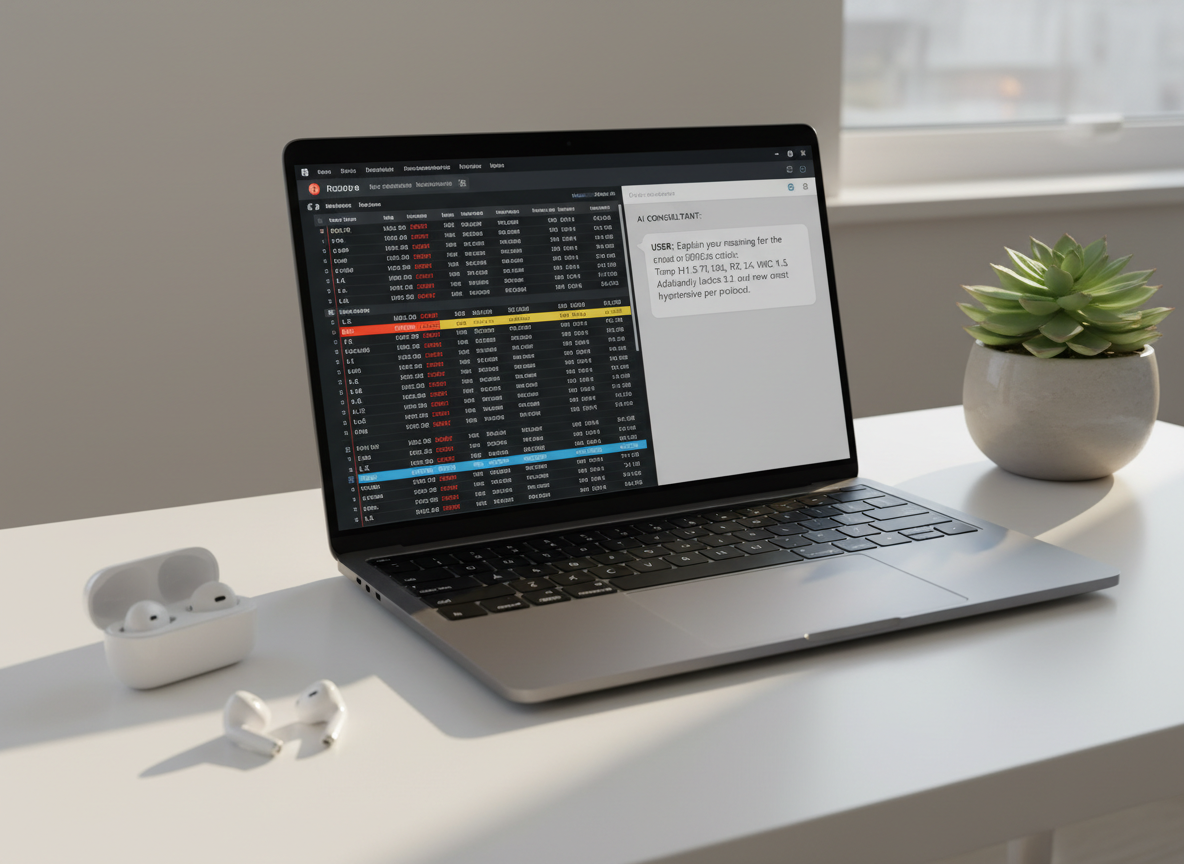
A split-screen laptop display on a tidy white desk, one side showing a richly detailed virtual ED tracking board with patient initials, acuity levels, and wait times, the other side an AI chat-style consultant window dissecting the logic behind a recent diagnostic choice. A pair of slim, wireless earbuds rests in an open case beside the laptop, and a small potted plant adds a touch of green at the edge of the frame. Soft afternoon light filters in from the left, producing gentle shadows and a calm yet intellectually charged atmosphere. Photographic realism, eye-level composition, and moderate depth of field highlight the interplay between workflow management and reflective reasoning.

Student Experience

VirtualShift Emergency Department simulation engages students in active decision-making by assessing virtual patients and defending reasoning to an AI supervisor.

Our Simulation Engine

The engine blends evidence-based learning, adaptive scenarios, and AI feedback to build diagnostic mastery.
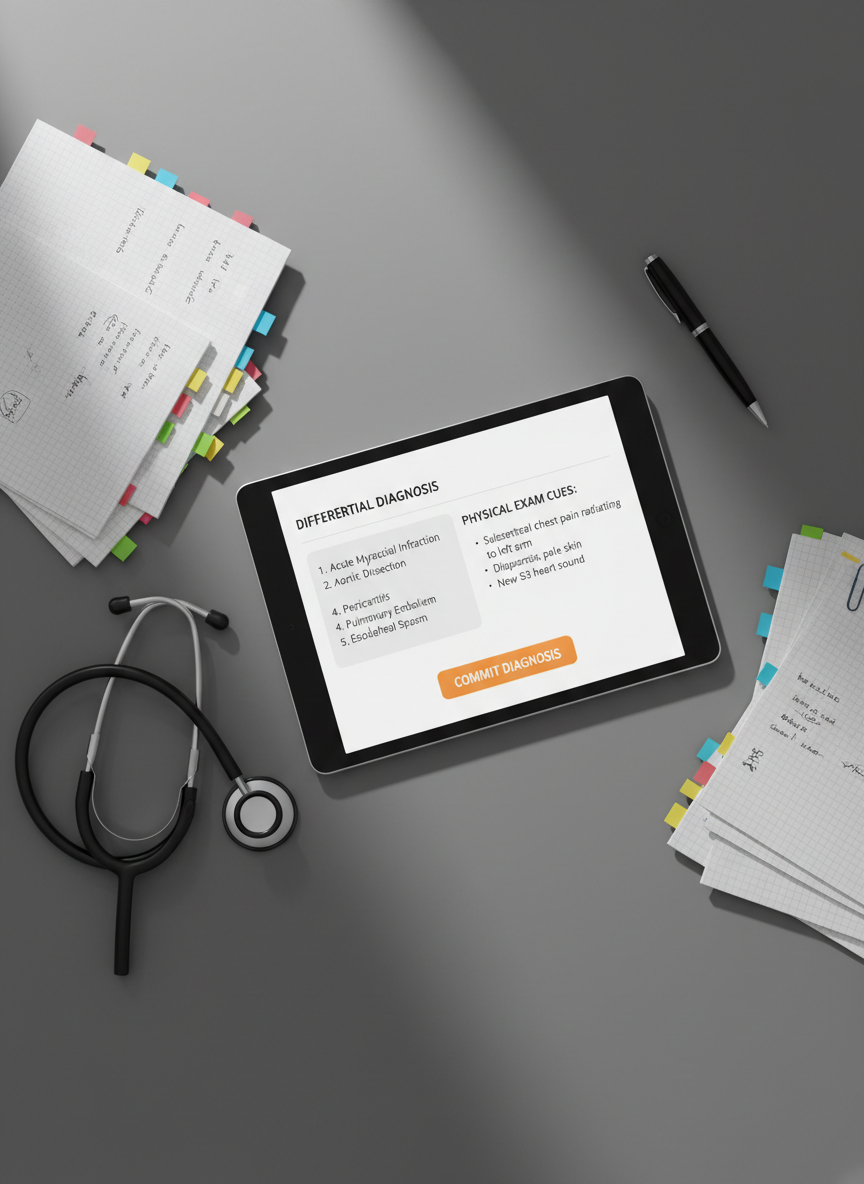
A tablet device lying on a smooth, slate-gray table, its screen showing a paused emergency simulation scenario: a structured differential diagnosis list, key physical exam cues, and a prominent “Commit Diagnosis” button glowing softly. Around the tablet are neatly arranged study notes with color-coded tabs, a stethoscope folded carefully, and a pen resting at a diagonal. Natural, diffused daylight from an unseen window creates gentle highlights on the tablet’s glass and soft shadows from the objects, evoking a quiet, focused study session. Photographic realism with an overhead, flat-lay composition emphasizes clarity, organization, and the transition from passive reading to active reasoning practice.
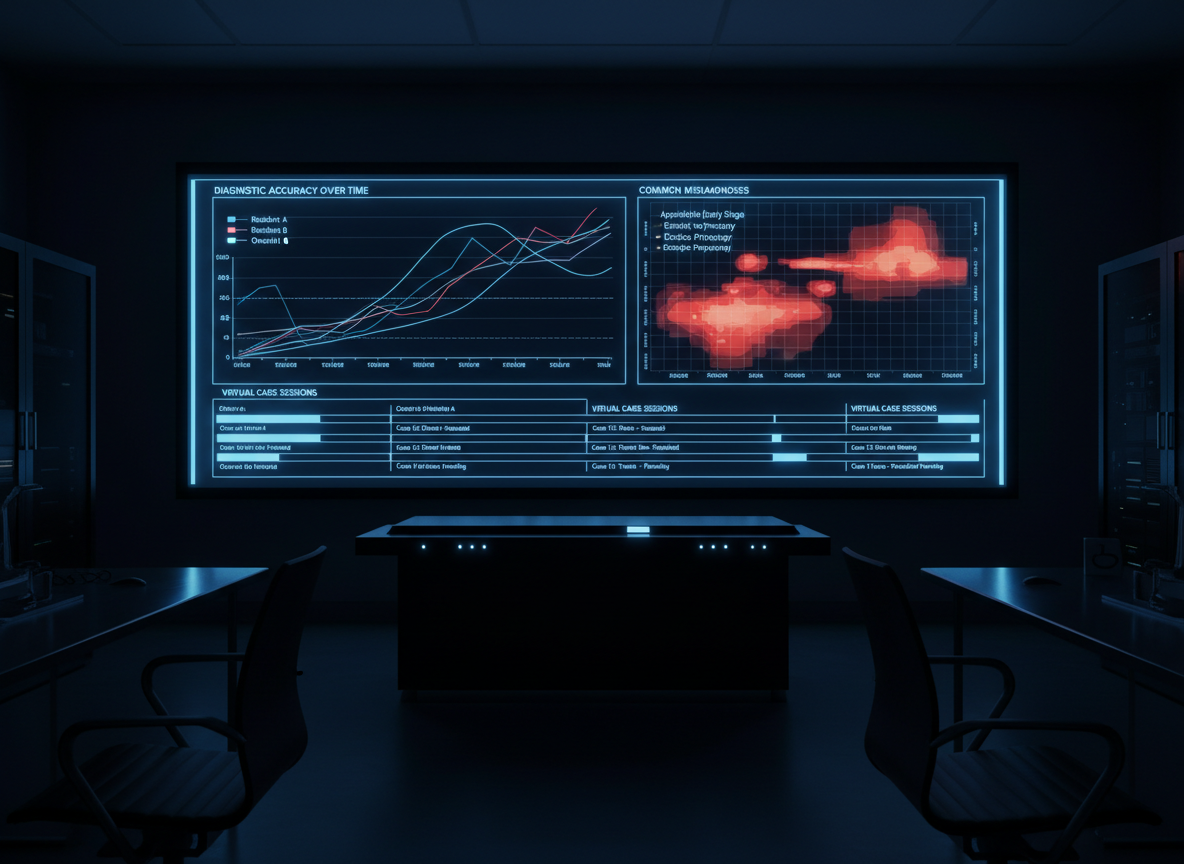
A large wall-mounted display in a dim, modern workspace showing an AI-powered emergency department analytics board: graphs of diagnostic accuracy over time, heatmaps of common misdiagnoses, and session timelines for multiple virtual cases. Below the screen, a sleek black console with subtle indicator lights hums quietly. The room is lit mainly by the cool glow of the display, casting soft blue reflections on nearby metallic surfaces and creating a cinematic, data-driven atmosphere. Photographic realism, wide-angle shot, and strong contrast between illuminated data and dark surroundings convey the power of AI feedback and performance tracking in clinical education.

Campus Use Cases

We enable curriculum integration, performance assessment, and remediation through realistic simulations and AI-guided feedback.

Real-world impact

Rating: 4.5 out of 5.

The platform challenged me to defend reasoning under time pressure.

Dr Rivera

Rating: 4.5 out of 5.

I felt my diagnostic reasoning sharpen with every case.

Student Casey

Rating: 4.5 out of 5.

Educators noted improved triage accuracy after sessions.

Alex Kim