A sleek virtual emergency department command center displayed on an ultra-wide, matte-finished monitor, showing a detailed digital dashboard of patient cases as color-coded tiles, vitals streaming in real time, and a central AI consultant panel analyzing decisions. The monitor sits on a minimalist white desk with a backlit mechanical keyboard and noise-cancelling headset resting beside it. Cool, diffused LED lighting from a light strip behind the desk creates a soft halo on a charcoal wall, while the rest of the room fades into gentle blur. Photographic realism, eye-level composition, and a shallow depth of field emphasize clarity, focus, and a calm yet high-stakes clinical atmosphere.

VirtualShifts: ED Simulation

About Virtual Shifts.com

VirtualShifts is an AI-powered emergency department simulation platform where medical students assess virtual patients, commit to diagnoses, and then defend their reasoning to an AI consultant supervisor. It transforms passive learning into active clinical decision-making through immersive cases, real-time feedback, and exam-focused questioning.
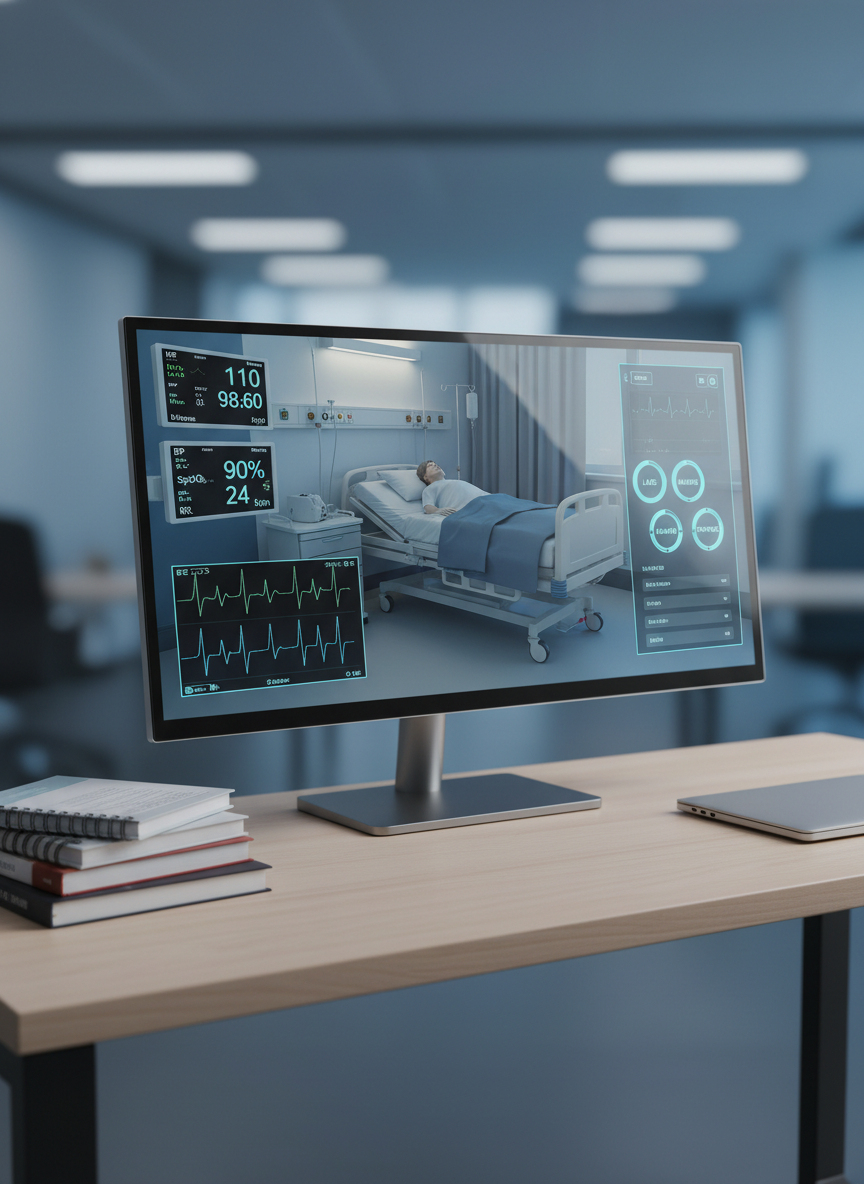
A high-fidelity 3D-rendered virtual patient room on a computer display, featuring a hospital bed, vital sign monitors showing fluctuating readings, and an interactive diagnostic panel with glowing buttons for labs, imaging, and exam findings. The screen is framed by a slim, modern bezel and placed on a clean, light-wood workstation with neatly stacked clinical guidelines and a closed laptop nearby. Soft, cool-toned overhead lighting reflects subtly off the monitor’s surface, while the background remains tastefully out of focus. Photographic realism with a slightly elevated angle conveys an immersive, high-tech, and organized learning environment for emergency medicine simulation.
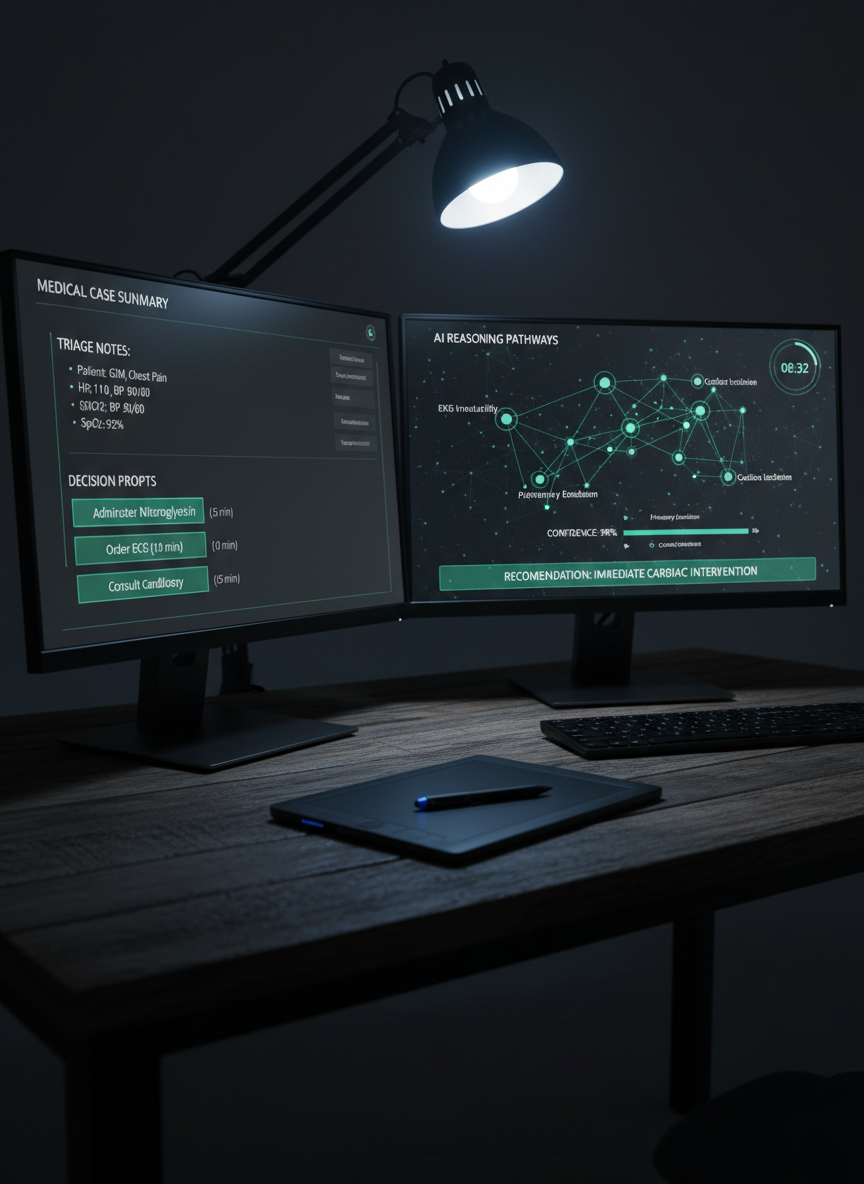
A close-up, photographic realistic view of a dual-monitor setup on a dark, textured desk, one screen showing a structured digital case summary with triage notes and timed decision prompts, the other displaying an AI consultant interface with highlighted reasoning pathways and confidence bars. A stylus tablet rests between the monitors, and a small digital clock in the corner counts down, adding urgency. The scene is lit by a single, cool-toned desk lamp that casts focused light across the workspace, leaving the edges in soft shadow. Shot from a three-quarter angle with shallow depth of field, the mood is intense yet controlled, underscoring active clinical decision-making under time pressure.
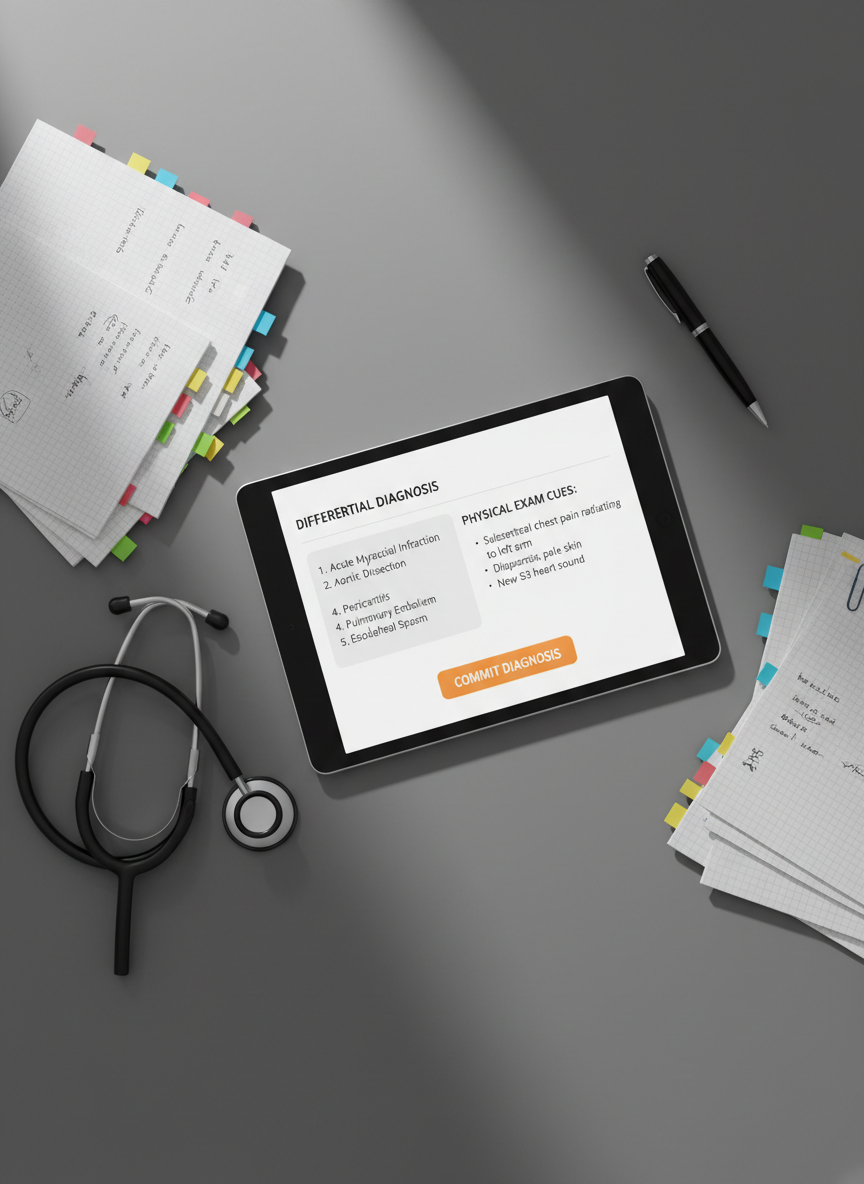
A tablet device lying on a smooth, slate-gray table, its screen showing a paused emergency simulation scenario: a structured differential diagnosis list, key physical exam cues, and a prominent “Commit Diagnosis” button glowing softly. Around the tablet are neatly arranged study notes with color-coded tabs, a stethoscope folded carefully, and a pen resting at a diagonal. Natural, diffused daylight from an unseen window creates gentle highlights on the tablet’s glass and soft shadows from the objects, evoking a quiet, focused study session. Photographic realism with an overhead, flat-lay composition emphasizes clarity, organization, and the transition from passive reading to active reasoning practice.

Our Services

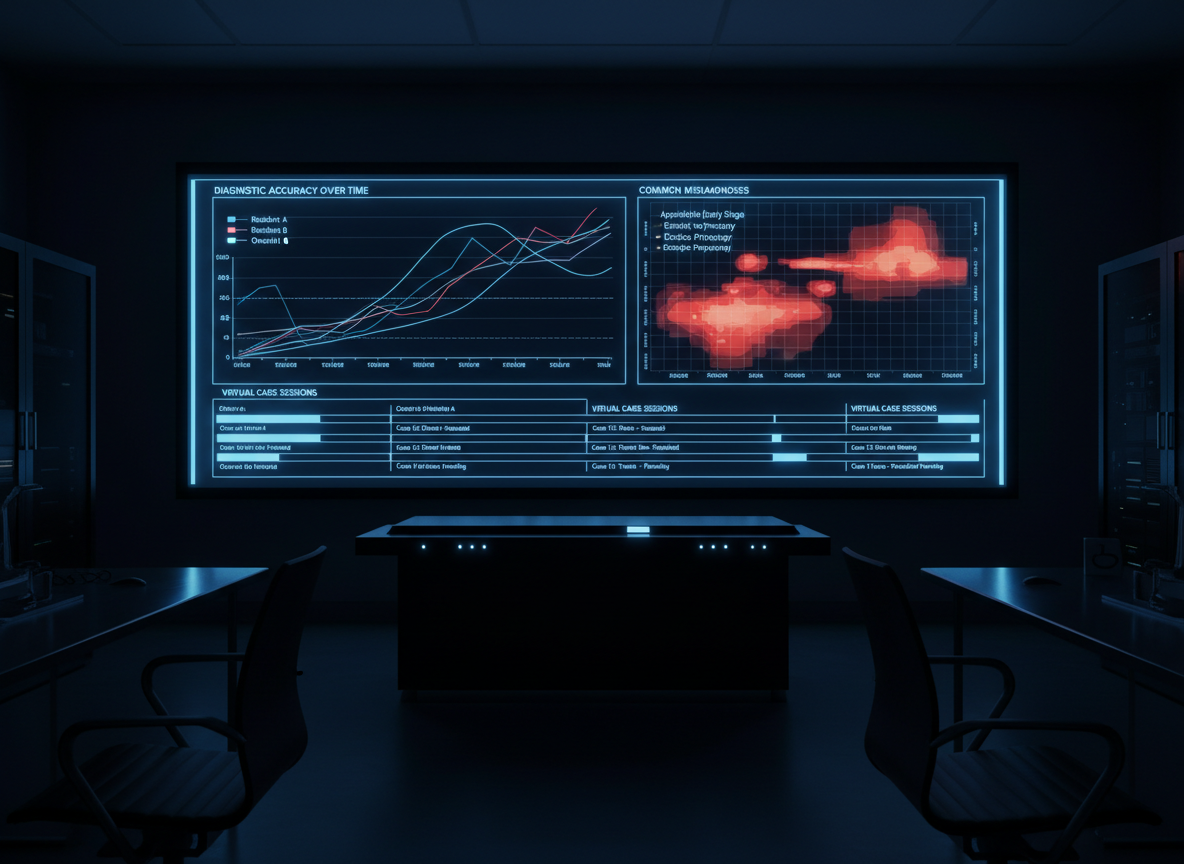
A large wall-mounted display in a dim, modern workspace showing an AI-powered emergency department analytics board: graphs of diagnostic accuracy over time, heatmaps of common misdiagnoses, and session timelines for multiple virtual cases. Below the screen, a sleek black console with subtle indicator lights hums quietly. The room is lit mainly by the cool glow of the display, casting soft blue reflections on nearby metallic surfaces and creating a cinematic, data-driven atmosphere. Photographic realism, wide-angle shot, and strong contrast between illuminated data and dark surroundings convey the power of AI feedback and performance tracking in clinical education.

We provide immersive scenarios across pediatric, trauma, toxicology, and cardiology ED settings, with adaptive difficulty and built-in debriefs to sharpen reasoning and communication.
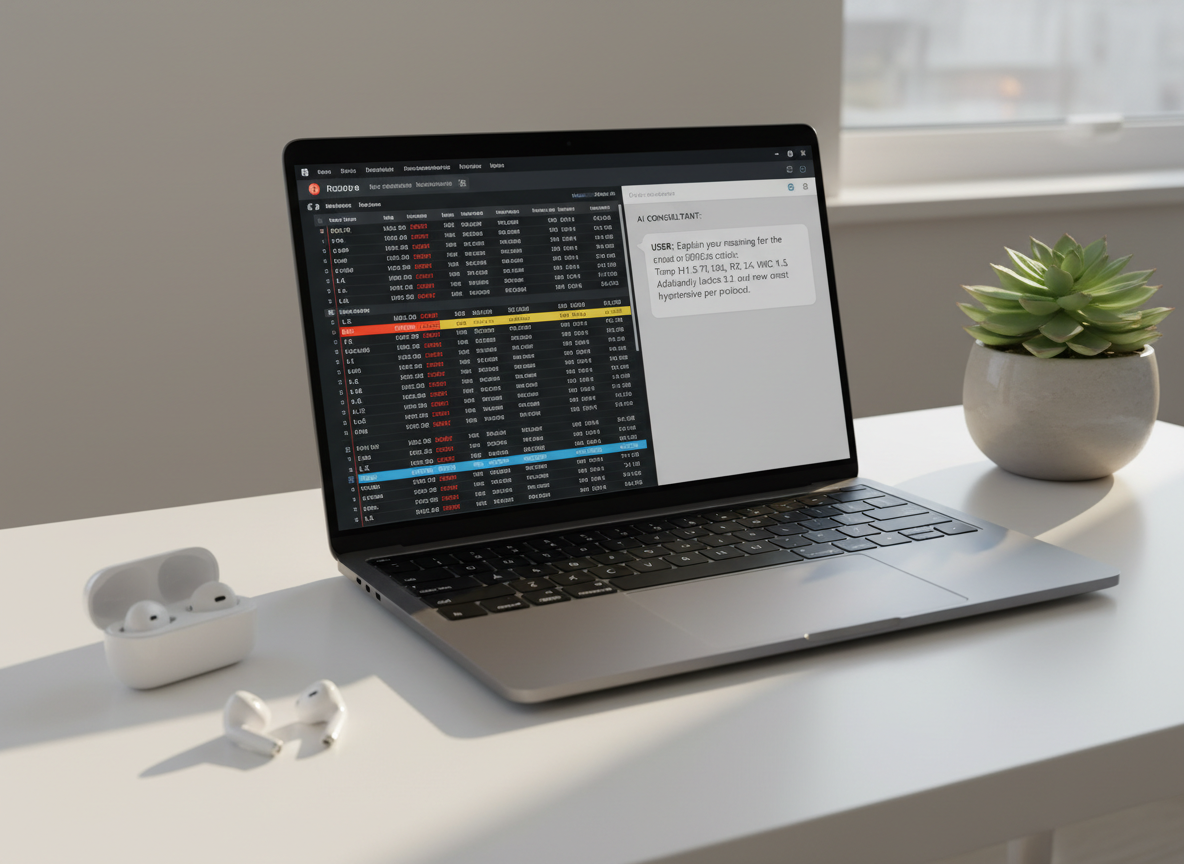
A split-screen laptop display on a tidy white desk, one side showing a richly detailed virtual ED tracking board with patient initials, acuity levels, and wait times, the other side an AI chat-style consultant window dissecting the logic behind a recent diagnostic choice. A pair of slim, wireless earbuds rests in an open case beside the laptop, and a small potted plant adds a touch of green at the edge of the frame. Soft afternoon light filters in from the left, producing gentle shadows and a calm yet intellectually charged atmosphere. Photographic realism, eye-level composition, and moderate depth of field highlight the interplay between workflow management and reflective reasoning.

Each shift offers virtual patients and discussion with an emergency consultant to challenge differential diagnoses, justify test orders, and defend treatment plans in structured, evidence-based discussions.

“I’ve struggled with presenting patients I have seen to my ED boss. This platform allows me to practice delivering my patient presentations in a simulated, non-confrontational environment .”

— Basil Smith (Simulated Year 3 Med Student)

Pricing Plans

FREE-mium Plan

$0 /mth

Includes access to 5 demo simulated ED cases and 5 conversations with an ED specialist.

Student Plan

$9 /mth

Includes access to all 86 simulated ED cases, real-time feedback, and AI consultant supervision. Limited access to over 300 MCQ, SAQ and OSCE exam question database.

Doctor Plan

$14 /mth

Includes access to all 86 simulated ED cases, real-time feedback, and AI consultant supervision. Full access to all >500 exam questions database.

Latest Posts

Get in touch

Reach out to request a demo, access pricing, or schedule a trial with our team to experience how VirtualShifts elevates emergency medicine education.

← Back

Thank you for your response. ✨